
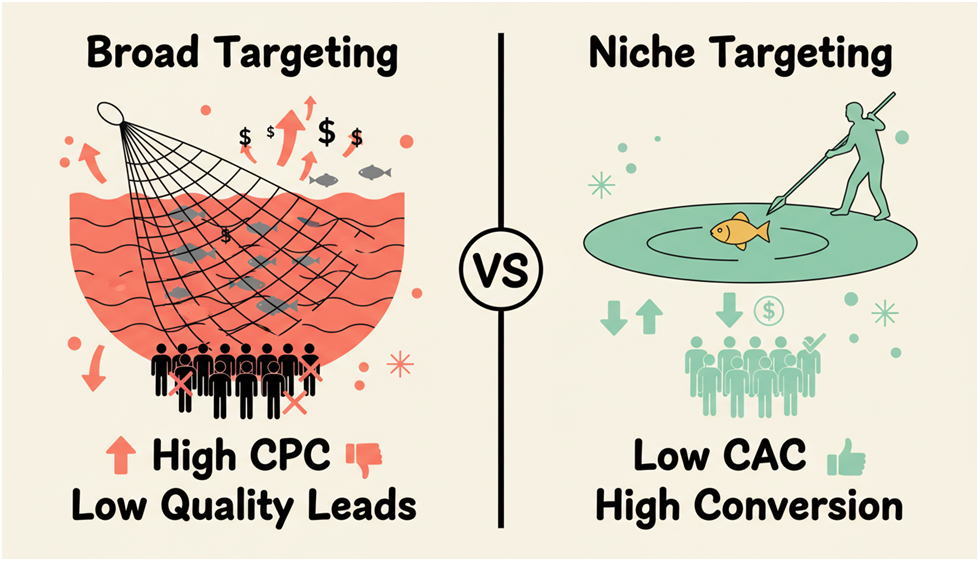
Your ideal customer is not “marketing managers aged 25-45.” That description fits millions of people, most of whom will never buy your software. B2B SaaS companies waste enormous budgets targeting broad audiences when their actual buyer pool is narrow, specific, and reachable through channels most marketers ignore.
Here are the niche audience targeting tactics that separate efficient growth teams from the ones burning cash.
Where Broad Targeting Falls Apart
Most ad platforms default to demographic and firmographic targeting. You pick job titles, company sizes, and industries. Then you bid against every other SaaS company targeting the same filters. The result is predictable: CPCs climb, lead quality drops, and your pipeline fills with people who downloaded your ebook but will never schedule a demo.
LinkedIn is the obvious example. It offers great B2B filters. It also charges a premium because every B2B advertiser crowds into the same audience pools. When everyone fishes the same pond, the fish get expensive.
Broad targeting does not mean you reach more buyers. It means you pay more to reach the same ones your competitors already found.
Targeting Tactics That Actually Narrow the Field
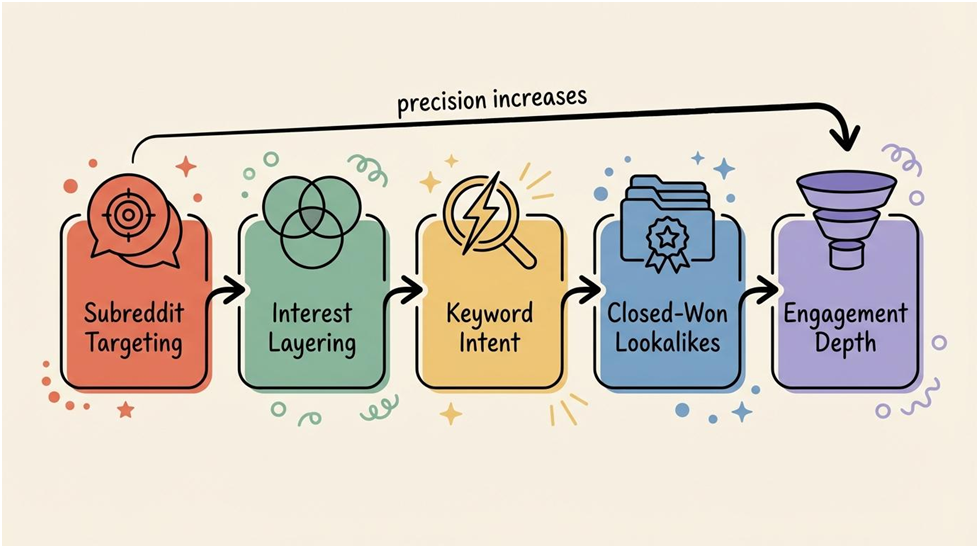
The best B2B SaaS teams go beyond platform defaults. They find audiences defined by behavior and intent, not just job titles.
Subreddit and Community Targeting
Communities organized around specific problems are goldmines for B2B targeting. When you advertise on reddit, you can target individual subreddits where your prospects actively discuss the exact pain your product solves. A DevOps tool company can target r/devops directly. That precision does not exist on most platforms.
Interest-Graph Layering
Combine multiple interest signals to create micro-audiences. Instead of targeting “marketing managers,” target people interested in marketing automation and A/B testing and product-led growth. Each added layer shrinks the audience and increases relevance. Smaller audiences convert at higher rates because the message matches their specific world.
Keyword-Intent Audiences
Some platforms let you target based on search behavior or content consumption. People who recently searched for your competitor’s name or read articles about your category are closer to a buying decision. These intent signals beat demographic proxies every time.
Lookalike Audiences From Closed-Won Deals
Your CRM holds your best targeting data. Build lookalike audiences from customers who actually closed, not from all leads. Most teams build lookalikes from their entire lead database, which includes tire-kickers and unqualified signups. Narrow the seed to closed-won accounts and the output audience quality jumps.
Retargeting by Engagement Depth
Not all website visitors are equal. Someone who visited your pricing page twice is more valuable than someone who bounced from a blog post. Segment your retargeting by engagement depth. Serve different messages to pricing page visitors, demo page visitors, and blog readers.
Putting Niche Targeting Into Practice
These tactics only work if you execute them correctly. Here is how to avoid common mistakes.
Start with your best customer profile. Interview your five best customers. Find out where they spend time online, what content they consume, and how they discovered your product. Build targeting around those patterns, not assumptions.
Test one tactic at a time. Layering all of these at once makes it impossible to know what works. Run subreddit targeting as an isolated test. Then try interest-graph layering separately. Compare results before combining.
Allocate budget by intent level. High-intent channels like search and community platforms deserve more budget per lead than top-of-funnel awareness plays. Teams that advertise on reddit often reallocate budget from LinkedIn once they see the cost-per-demo difference.
Refresh audiences monthly. Niche audiences are small. They fatigue faster than broad ones. Update your seed lists, rotate creatives, and expand into adjacent communities before performance declines.
Your Competitors Are Already Going Niche
The B2B SaaS companies growing most efficiently right now are not the ones with the biggest budgets. They are the ones with the most precise targeting. They find the 5,000 people who actually need their product instead of spraying ads at 500,000 who might.
Every quarter you spend on broad targeting is a quarter your competitors spend sharpening their aim. The math is simple. Niche targeting produces lower CAC, higher conversion rates, and better pipeline quality. The only cost is the effort to set it up.
That effort pays for itself in the first month.