
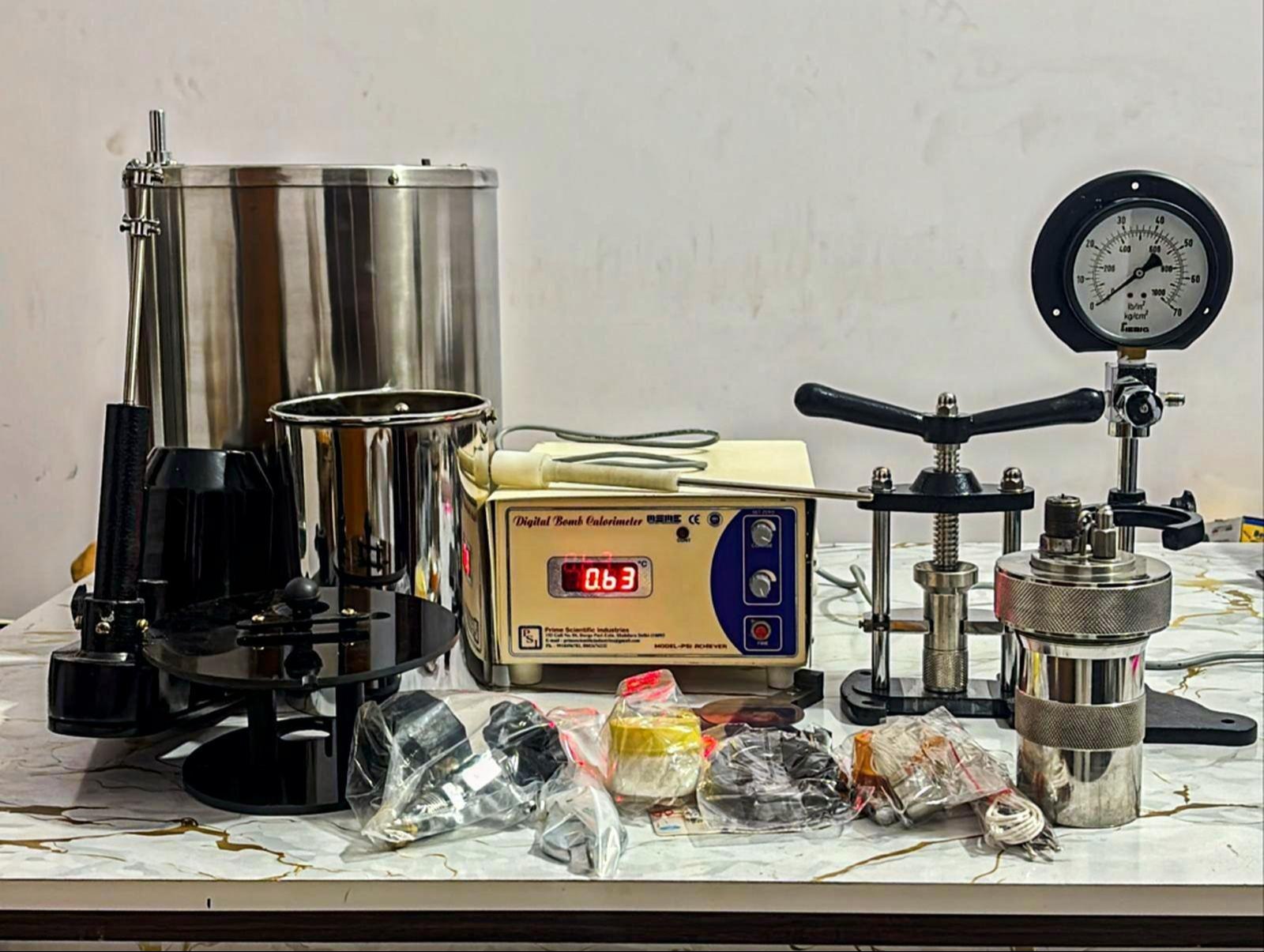
Calorific Value Testing is a fundamental analytical process used to determine the energy content of fuels and combustible materials. It measures the amount of heat released when a substance is completely burned under controlled conditions. This value is crucial for evaluating fuel efficiency, quality, and suitability for industrial, commercial, and domestic applications. Industries such as power generation, cement manufacturing, metallurgy, food processing, and renewable energy rely heavily on accurate calorific value analysis to optimize performance and control costs.
Understanding Calorific Value
Calorific value refers to the total energy released as heat during the complete combustion of a material. It is typically expressed in kilojoules per kilogram (kJ/kg) or kilocalories per kilogram (kcal/kg) for solid and liquid fuels, and kilojoules per cubic meter (kJ/m³) for gaseous fuels. The calorific value indicates how much usable energy a fuel can produce, making it a critical parameter for energy planning and fuel selection.
There are two main types of calorific value:
Gross Calorific Value (GCV), also known as Higher Heating Value (HHV), includes the total heat produced, including the latent heat of vaporization of water formed during combustion.
Net Calorific Value (NCV), or Lower Heating Value (LHV), excludes the heat used to vaporize water, representing the actual usable energy in most real-world applications.
The distinction between GCV and NCV is important because industrial systems typically operate under conditions where water vapor escapes, making NCV more practical for efficiency calculations.
Importance of Calorific Value Testing
Calorific Value Testing plays a vital role in quality assurance and operational efficiency. For fuel suppliers, it ensures compliance with contractual and regulatory specifications. For end users, it helps compare fuels and determine their economic value. Higher calorific value generally means more energy output per unit of fuel, resulting in lower fuel consumption and reduced operating costs.
In power plants, accurate calorific value data is essential for boiler efficiency calculations and emission control. In the cement industry, it helps determine the suitability of alternative fuels such as refuse-derived fuel (RDF) and biomass. In the food industry, calorific value testing is used to calculate the energy content of food products for nutritional labeling. Environmental agencies also rely on calorific values to estimate greenhouse gas emissions and energy recovery potential.
Principle of Calorific Value Testing
Calorific value testing is based on the principle of complete combustion. A known quantity of the test sample is burned in an oxygen-rich environment, and the heat released is absorbed by a surrounding medium, usually water. The temperature rise of the water is measured, and the energy released is calculated using established thermodynamic equations.
The most commonly used instrument for this purpose is the bomb calorimeter. It consists of a sealed combustion chamber (the bomb), which is submerged in a known volume of water. The sample is ignited electrically, and the temperature change of the water is precisely recorded.
Bomb Calorimeter Method
The bomb calorimeter method is widely regarded as the most accurate and reliable technique for determining the calorific value of solid and liquid fuels. The process begins with sample preparation, where the fuel is dried, ground, and weighed accurately. The sample is then placed in the crucible inside the bomb calorimeter.
Pure oxygen is introduced into the bomb at high pressure to ensure complete combustion. Once sealed, the bomb is immersed in the calorimeter water jacket. An ignition wire is used to initiate combustion. As the sample burns, heat is released and absorbed by the water, causing a measurable temperature rise.
Using the known heat capacity of the calorimeter system and the observed temperature increase, the gross calorific value of the sample is calculated. Corrections are applied for heat losses, ignition energy, and formation of acids, ensuring high accuracy and repeatability.
Alternative Methods of Testing
While bomb calorimetry is the standard method, other techniques are also used depending on the material and application. For gaseous fuels, calorific value is often measured using gas calorimeters or calculated from gas composition analysis. In some cases, calorific value can be estimated using empirical formulas based on elemental composition, known as ultimate analysis.
However, calculated values are generally less accurate than experimental methods and are primarily used for preliminary assessments. For regulatory compliance and commercial transactions, direct calorimetric testing is preferred.
Sample Preparation and Accuracy
Proper sample preparation is critical for accurate calorific value testing. Moisture content significantly affects results, as water absorbs heat during combustion. Samples are typically dried to a constant weight before testing. Homogeneous grinding ensures representative sampling, especially for heterogeneous materials like coal or waste-derived fuels.
Calibration of the calorimeter using standard reference materials, such as benzoic acid, is performed regularly to maintain accuracy. Strict adherence to standardized testing procedures minimizes errors and ensures reproducibility of results.
Standards and Quality Control
Calorific value testing is governed by international and national standards to ensure consistency and reliability. These standards define sample preparation methods, testing procedures, calculation formulas, and reporting formats. Laboratories conducting calorific value testing must follow these standards and implement quality control measures, including routine calibration, duplicate testing, and participation in proficiency testing programs.
Accredited laboratories provide greater confidence in test results, particularly when data is used for legal, commercial, or regulatory purposes.
Applications Across Industries
Calorific value testing has broad applications across multiple sectors. In the energy sector, it supports fuel procurement decisions and efficiency monitoring. In waste management, it helps assess the energy recovery potential of municipal solid waste and industrial residues. In agriculture, it is used to evaluate biomass fuels such as bagasse, rice husk, and wood pellets.
In the food industry, calorific value testing determines the energy contribution of ingredients and finished products, supporting nutritional analysis and labeling requirements. Research institutions use calorific value data to develop new fuels and improve combustion technologies.
Calorific Value Testing is an essential analytical tool for understanding the energy potential of fuels and combustible materials. By providing accurate and reliable measurements, it supports efficient energy use, cost optimization, regulatory compliance, and environmental protection. Whether applied in power generation, manufacturing, food production, or research, calorific value testing enables informed decision-making and sustainable energy management.
As industries increasingly explore alternative fuels and renewable energy sources, the importance of precise calorific value determination continues to grow. Reliable testing ensures that fuels meet performance expectations while contributing to safer, more efficient, and environmentally responsible operations.